28 May, 2026
The 10 Key Tips That Will Make You Elite at World Cup Fantasy 2026
Want to dominate World Cup Fantasy 2026? Master the captaincy loop, exploit advanced chips, and use these 10 elite strategies.

The FIFA World Cup Fantasy game is finally back, and if you’ve only ever played FPL before, you’re about to realise this is a completely different beast.
Manual substitutions. Captain switches. Boosters. Differential bonuses. Knockout strategy. There’s far more room for aggressive play, tactical planning, and huge rank swings than in regular season-long fantasy football.
And because the tournament is short, every single decision matters more.
One perfect captain switch can launch you up thousands of places. One badly timed transfer spree can completely ruin your round.
So if you want to compete properly — whether that’s winning mini-leagues with friends or chasing an elite overall rank — these are the 10 biggest tips you need to know before the tournament starts.
Before we get started, make sure you check out our How to Play guide for the full updated ruleset.
1. Target Strong Nations With Easy Groups
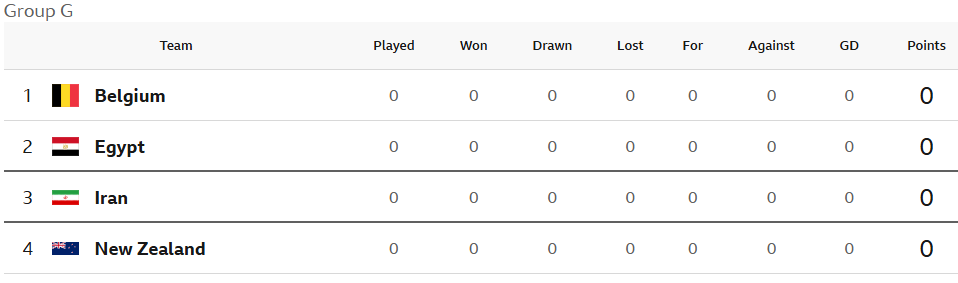
This sounds obvious, but it’s probably the single most important rule in World Cup Fantasy.
You want players from teams who are likely to:
- Win matches comfortably
- Score lots of goals
- Keep clean sheets
- Avoid rotation stress early
- Progress deep into the tournament
The biggest trap every tournament is blindly picking stars from difficult groups.
A top player can still blank repeatedly if they’re stuck in tight, low-scoring games against strong opposition. Meanwhile, players from elite nations with easier routes often rack up huge scores quickly.
You want to identify teams who can dominate the group stage.
Think:
- Portugal
- Belgium
- Argentina
- Netherlands
And then look carefully at the actual fixtures.
A striker facing weaker opposition in Matchdays 1 and 2 can easily outscore a “better” player stuck in tougher games.
KEY TIP: If you are planning on wildcarding in matchday 3, then starting with players whose easiest games are their first 2 group games is optimal.
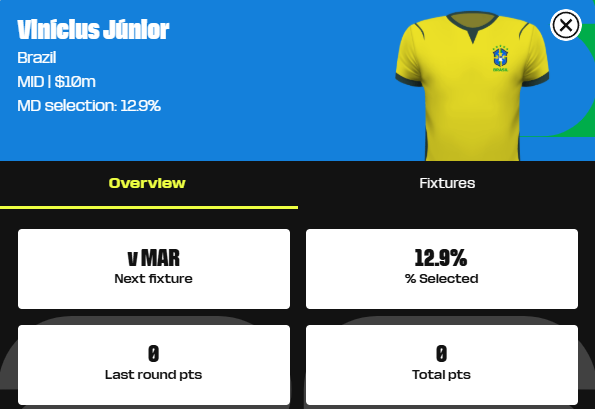
- For example: Even though Spain and Brazil both have 2 easier games and 1 hard game, Spain have their easy games in MD1 & MD2. Whereas Brazil have their hard game, Morocco, in MD1. Meaning Spain players may be more optimal to start with if it comes down to a choice between the 2. As you can always WC out your Spain players ahead of their trickier MD3 fixture against Uruguay.
Easy fixtures are king in tournament fantasy.
2. Spread Your Squad Across Multiple Matchdays
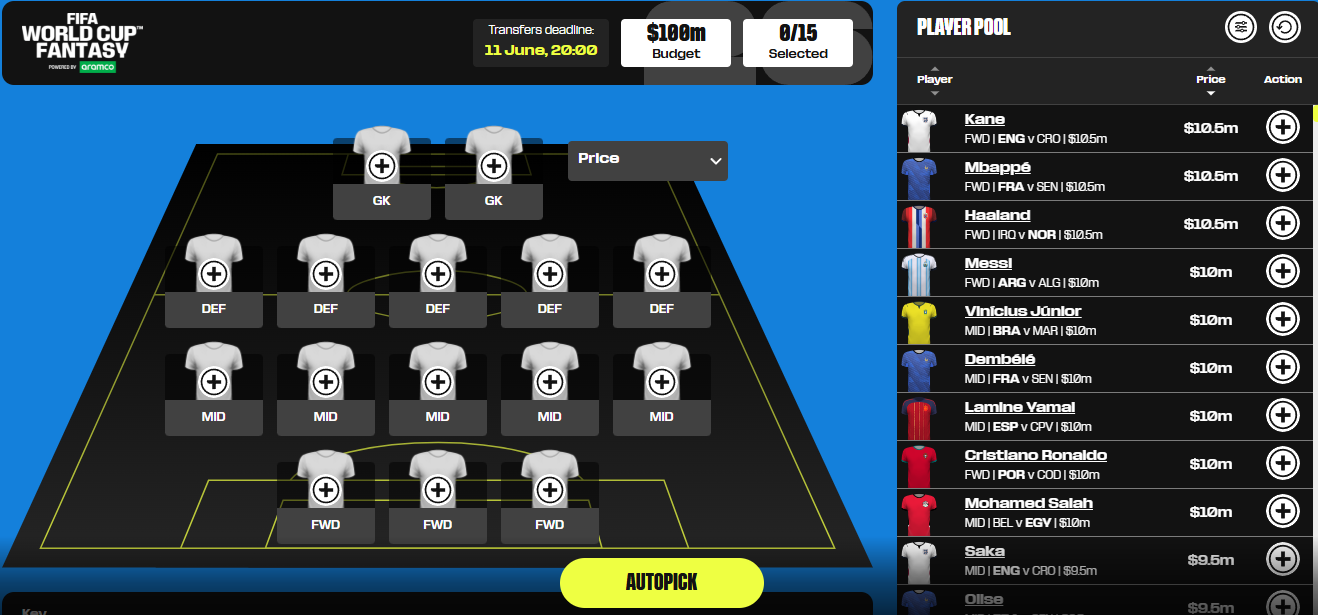
This is where World Cup Fantasy becomes completely different from FPL.
Because you can:
- manually substitute players
- switch captains mid-round
…you want your players spread across as many different kickoff days as possible.
Why?
Because it gives you maximum flexibility.
If your early captain blanks, you can switch to another premium later in the round.
If one of your defenders scores only two points, you can bench them and bring on someone else who hasn’t played yet.
Managers who stack too many players on the same day lose that flexibility entirely.
The best World Cup Fantasy squads are built almost like a staggered schedule:
- some players early
- some mid-round
- some late
That structure gives you constant escape routes.
3. Time Your Boosters Properly
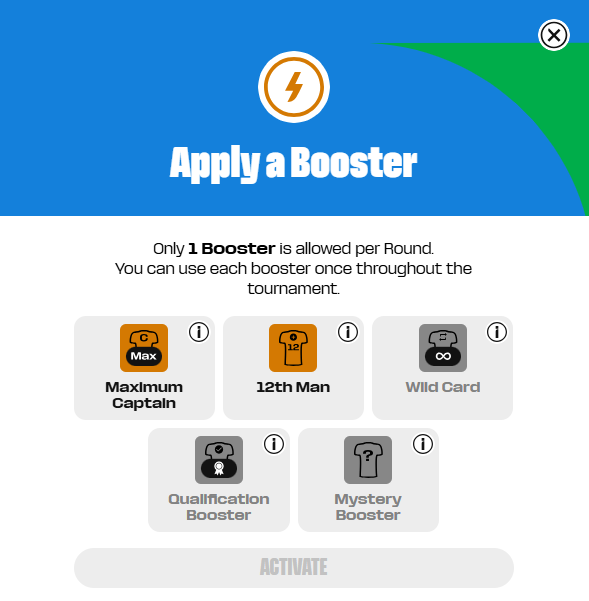
The boosters are incredibly powerful, but using them at the right time matters massively.
A lot of managers will overthink this. In reality, there’s a fairly logical structure to when each chip becomes strongest.
Maximum Captain — Best in MD1 or MD2
Many managers may prefer to save this for later rounds where point disparity is a factor, but it’s arguably strongest during the easier early fixtures.
The reason is simple:
- Group stage mismatches create huge captain hauls
- Stars are more likely to start unlike MD3
- There are more premium options available
- Elite nations often score heavily
If Mbappé, Kane, Vinícius Jr or Messi explode, Maximum Captain guarantees you hit the best one automatically if they are spread out properly.
It removes risk completely.
12th Man — Flexible but Excellent for MD1 or MD2
The 12th Man chip is ideal when:
- one elite player has a standout fixture
- but you don’t necessarily want them permanently in your squad as they may have a tough group.
For example:
- Haaland vs Iraq in MD1
- Mbappe vs Iraq in MD2
This is therefore best used in the alternating MD1 or MD2 to your Maximum Captain.
However: This can be saved for a knockout game should a big nation get an easy draw. So don’t stress too much if you end up not using it in the group stage.
Wildcard — Best in Matchday 3
This is arguably the clearest strategy of all.
By Matchday 3:
- many teams will already be qualified
- rotation becomes a huge issue
- star players get rested
The Wildcard lets you aggressively attack teams who still need results while removing rotation risks.
Qualification Booster — Round of 32
This is where knockout mismatches are often biggest.
You’ll usually get several favourites facing weaker third-place qualifiers, making progression easier to predict.
That makes the Qualification Booster especially valuable here. No brainer for use in round of 32.
4. Don’t Get Too Clever — Trust Proven International Performers
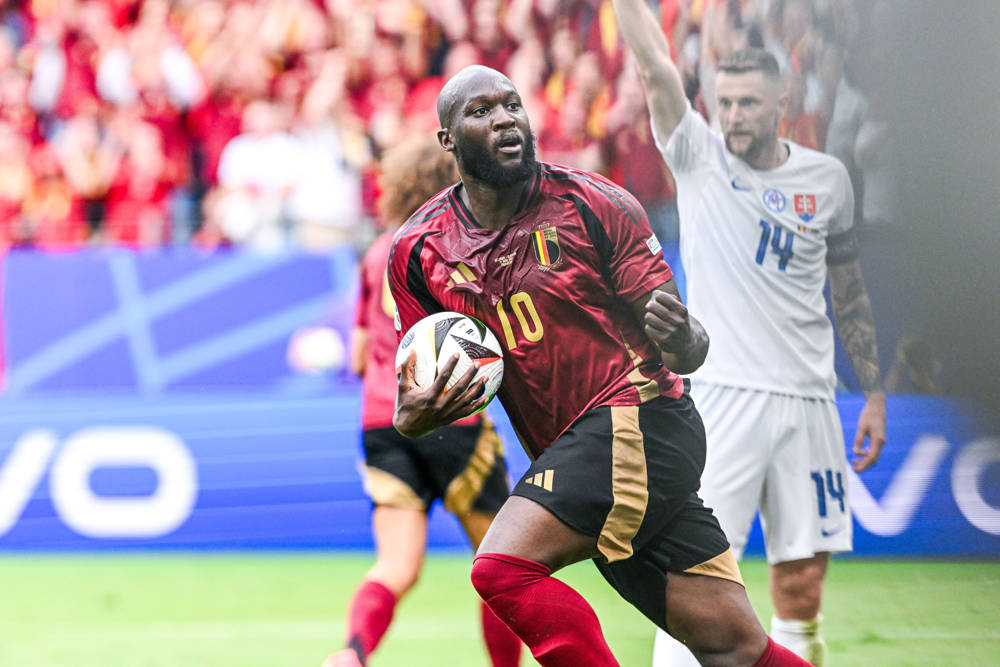
Every tournament, fantasy managers fall into the same trap:
trying to predict the next breakout star.
But international football often rewards proven tournament players instead.
Why?
Because entire national systems are usually built around feeding their established stars.
That’s why players like:
- Harry Kane
- Kylian Mbappé
- Romelu Lukaku
- Memphis Depay
…often continue delivering huge international returns regardless of club form.
Meanwhile, exciting names like:
- Julián Álvarez
- Arda Guler
- Matheus Cunha
…may still be adapting to international systems or sharing responsibility.
International football is different from club football.
Experience matters massively.
5. Think Ahead About Transfers

One of the biggest mistakes managers make is loading up on underdogs or risky picks without thinking about future rounds.
Remember:
you always want a full starting XI and active bench players available.
If too many of your players get eliminated or rotated, you suddenly burn transfers just trying to field a functioning squad.
Especially when wildcarding, think beyond just one round.
Ask:
- Will this team likely progress?
- Will this player still matter next week?
- Am I creating transfer problems later?
Long-term planning matters more than people think. The more transfers you can save, the more aggressively you can attack the knockouts, and the less hits you’ll have to take.
6. Don’t Burn Transfers Too Early During a Matchday

This is a huge one.
World Cups are chaotic.
Upsets happen constantly.
A favourite losing unexpectedly can suddenly leave you with:
- eliminated players
- rotation problems
- injuries
- suspended assets
If you aggressively use transfers too early during a live matchday, you can easily trap yourself.
Patience is key.
Often the smartest move is waiting until:
- most matches are complete
- injury news is clearer
- qualification scenarios are confirmed
Save your flexibility.
7. Start Earlier Players First
This is probably the single biggest gameplay edge in World Cup Fantasy.
Always:
- start earlier players
- captain earlier players
- bench later players initially
Why?
Because it maximises your options.
If your early players do well:
- you keep their points
If they blank:
- you replace them later
This strategy lets you constantly optimise throughout the round.
The same applies to captaincy.
Early captain blanks?
Twist to another premium later.
Early captain explodes?
Stick.
That flexibility is what separates elite managers from casual players.
8. Exploit the New Differential Bonus Rule
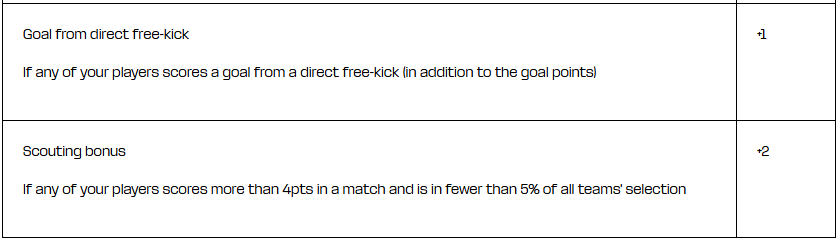
One of the best new additions for 2026 is the scouting bonus.
If a player:
- scores more than 4 points
- and has under 5% ownership
…they gain an extra +2 bonus points.
This massively rewards clever differential picks.
And one of the best ways to exploit it is through defenders.
Why?
Because defensive points are shared.
If a heavily favoured nation keeps a clean sheet:
- every defender benefits equally
But ownership levels won’t be equal.
For example:
- a famous full-back might be 25% owned
- another starting defender from the same team could be 2%
Both get the clean sheet points.
Only one gets the scouting bonus.
That’s a massive edge.
Low owned midfielders from mid tier nations with easier groups are another good way to attack this, especially if they are on penalties.
9. Attackers Are Still King

Some fantasy managers will overcomplicate defensive structures because of the clean sheet rewards.
But ultimately:
attackers still dominate tournament fantasy.
Goals win games.
Goals win fantasy
The safest strategy is usually going big up front with elite forwards. Not least as they often take penalties and free kicks as well. With free-kicks providing a bonus point.
Think:
- Mbappé
- Kane
- Messi
- Depay
- Lukaku
Then use:
- midfield
- defence
- goalkeeper
…to hunt differentials and value picks.
The ceiling of premium attackers is simply too high to ignore.
10. Play Your Own Way
This is the most important tip of all.
There will always be:
- templates
- “must-own” players
- popular chip strategies
- Twitter hype trains
And yes, some of those ideas will absolutely help.
But if you genuinely want to compete at the top level, you’ll still need instinct.
World Cup Fantasy is short.
Variance is massive.
Upsets happen constantly.
Sometimes the winning move is simply trusting your gut.
Maybe you back a differential captain.
Maybe you ignore a template pick.
Maybe you target a nation everyone else overlooks.
That’s part of the fun.
This guide should help give you structure and strategy — but it’s not a rulebook.
The best fantasy managers balance good process with bold decision-making.
And during a World Cup, those bold decisions can change everything.
Final Thoughts
FIFA World Cup Fantasy 2026 is shaping up to be one of the most strategic fantasy games we’ve had in years.
The combination of:
- captain switches
- manual substitutions
- differential bonuses
- boosters
- knockout transfers
…creates far more depth than most people realise at first.
Managers who stay active, plan ahead, and exploit the game mechanics properly will gain huge advantages over casual players.
And because the tournament only lasts a few weeks, every smart move becomes amplified.
One perfect round can completely transform your rank.
That’s exactly what makes World Cup Fantasy so great.
Check out our Feature Articles section for more World Cup Fantasy Tips.