 27 Apr, 2026
FPL Bonus Points: Highest Scorers and Profiles to Target
Master the Bonus Points System. We identify the high-ceiling profiles and stats you need to target for consistent FPL rank climbs.
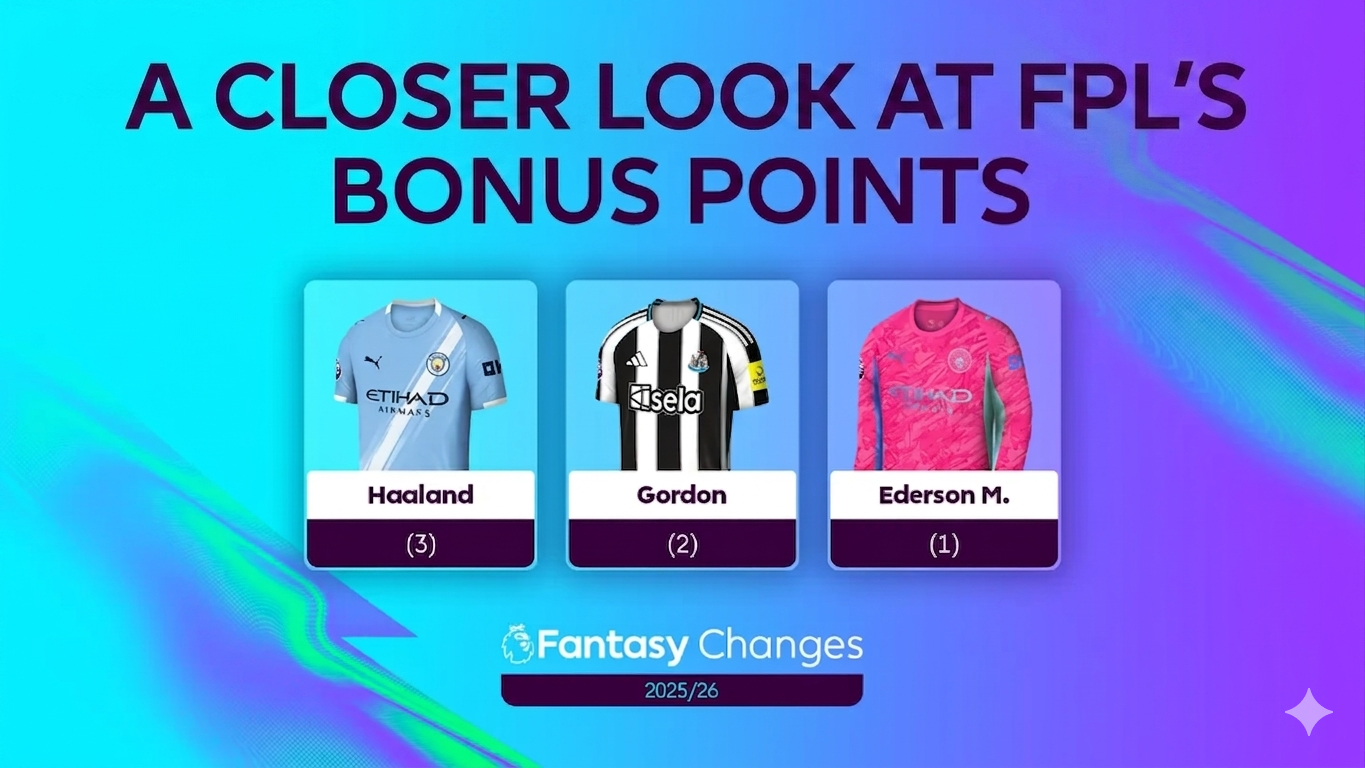
When you’re torn between two players of similar quality and fixtures, bonus point propensity can be a tiebreaker that wins you mini-leagues. It’s one of those underrated edges that separates managers who grind out green arrows from those who stay frustratingly flat, and heading into GW34, the data makes a compelling case for leaning on it.
The BPS system rewards actions like goals, assists, shots on target, key passes, tackles, and clean sheets. The top performers each Gameweek earn 1, 2, or 3 bonus points, and over a full season, those extra points compound into the kind of margins that decide mini-leagues. So which player archetypes are cleaning up?
Before we get stuck in, if you are looking for the updated bonus point scoring system as well as some initial insights, then check out our Bonus Point Scoring system article
Strikers and Central Midfielders Dominate the Bonus Points
Strikers and central midfielders are the two archetypes that consistently top the BPS charts, and the data makes that crystal clear. Strikers earn heavily through goals, shots on target, and involvement in dangerous areas, every shot, every accurate touch in the final third feeds into their raw score. Central midfielders benefit from a broader combination: goals, assists, key passes, tackles, and high touch volumes through the middle of the pitch.
Wingers, by contrast, tend to have lower BPS floors. Their wider positioning reduces tackle, shot and pass volume compared to central players, meaning they need direct goal contributions to compete. Defenders earn mainly through clean sheets and clearances, so their bonus is far more match-context dependent. Goalkeepers have the narrowest BPS pathway of all, saves, penalties saved, and clean sheets pretty much cover it. That’s not to say they can’t get there though.
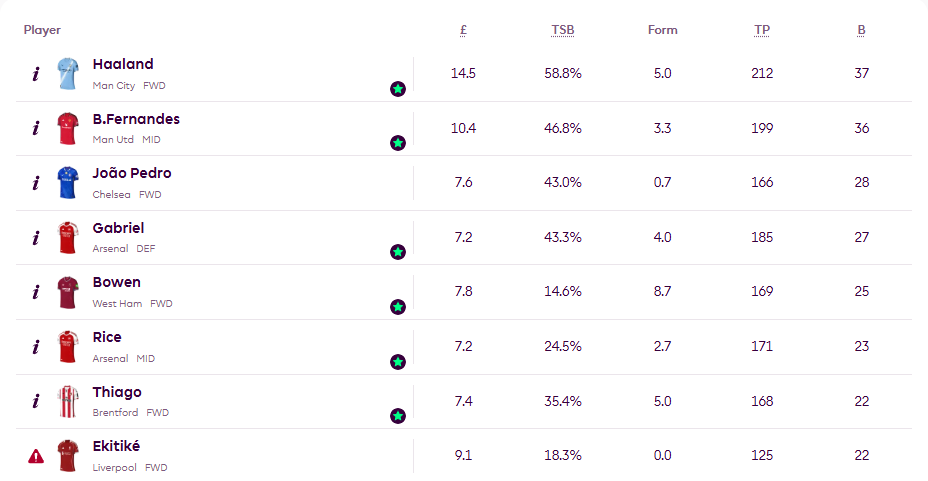
The form analysis backs this up season-wide. Haaland (37 BPS in GW34) and Bruno Fernandes (36 BPS) sit clear at the top of the single-gameweek rankings, a striker and a central midfielder, exactly as the system predicts. That’s not a coincidence. It’s the BPS engine doing exactly what it was designed to do.
Why use Bonus Point Result Totals over Bonus Point System Totals?
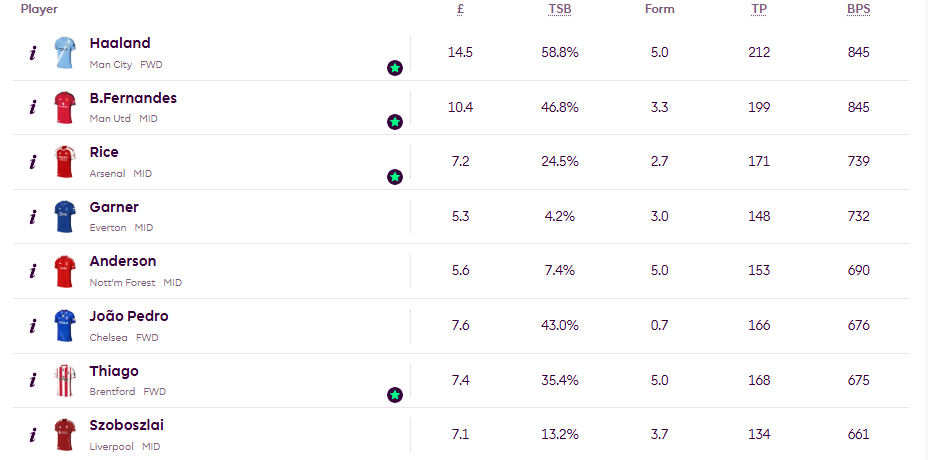
Now this is where it gets both interesting and paradoxical. There are a number of players who feature high up the BPS tables, but much lower down the actual Bonus Points score ratios. Now what’s interesting is, a lot of these players seem to be a similar profile. See if you can spot the common theme.
- James Garner: 4th in BPS, 32nd in Bonus Points.
- Elliot Anderson: 5th in BPS, 47th in Bonus Points.
- Alex Scott: 14th in BPS, 34th in Bonus Points
- Ethan Ampadu: 20th in BPS, 49th in Bonus Points
No prizes for guessing what the common theme is here. High DefCon returns + Low Attacking Returns. Other players such as Rice, Casemiro, Bruno G, Bruno F etc, despite having decent DefCons, also find themselves higher up the bonus point table because of their attacking returns.
This naturally means that while these sorts of players will tick along with a very solid floor, they will seldom reach bonus point territory as these often require high scoring individual weeks, achievable only through attacking returns. Now yes, these consistent defensive contributions will provide these players with a very solid BPS floor, day in and day out, but unlike FPL points, Bonus point awarding does not concern itself with floors or averages, only one game peaks. Which as a result, will often lean towards strikers who can stack multiple returns and shots, and central midfielders with a propensity for attacking returns as well as defensive contributions.
At least Bonus Points are fighting the good fight and combatting the sweeping tide of Purely DefCon picks.
This in turn leads me to another point. I get the logic of including Anderson, Garner, Scott and Ampadu as long term holds who can keep getting you a solid floor of points whenever someone can’t play, regardless of fixture. But for one week Free Hits I do not get the appeal. They are useful in that sense for conserving Free Transfers, as unlike a Wilson for example, their main point source is far less dependent on Fixture Difficulty. So yes, great longer term transfer conservative holds, but not optimal for Free Hits where the sky should be the limit.
If we got to put out a brand new team every single Gameweek, each team would be full of players with the best attacking match ups, as their ceiling is increased by more than the DefConers floor is. The value of the Defcon heavy midfielder isn’t in their one week hauls, it’s in the transfers they allow you to conserve in the long run, and the injuries they allow you to cover. As regardless of their fixtures, you can often bank on a 4 pointer and deploy them where necessary. They are insurance.
Positional Outliers
It’s also worth noting the positional outliers. Gabriel and Matheus N. earn their places through a combination of defensive actions and genuine attacking contributions, Gabriel has 3 goals and 5 assists this season. Matheus Nunes has 1 goal and 9 assists. These are exceptions that prove the positional rule due to their attacking returns. So yes, Strikers and central midfielders dominate, but defenders with elite attacking output can muscle their way in too. With defenders who tend to mainly achieve primarily DefCon returns, taking a backseat in terms of Bonus Points.
When to be Cautious: vs Bonus Point ‘Hogs’

It is worth noting that during high profile fixtures between Bonus Point ‘Hogs’, you may want to look in other directions if you are caught up in a dilemma. For example, if Man United are playing Arsenal, then bonus points may not be a good deciding factor if you are choosing between an Mbeumo or Marcus Tavernier type for example. This is because Mbeumo will be involved in a match with the likes of Bruno, Rice and Gabriel, all of which have proved bonus point magnets throughout the season due to their profiles and BPS sources. Whereas if Tavernier is playing a Fulham or Palace type team, who have way less standout Bonus Point getters, then he has a higher chance of reaching the magic 3.
When Bonus Propensity Should Drive Your Transfer Decision
Bonus propensity isn’t always the loudest voice in the room, fixtures, form, and price all matter more in isolation. But when ownership is similar and the fixture ticker is roughly equivalent, Bonus Point history is a genuine FPL edge that most managers ignore.
If you’re choosing between two similarly-priced strikers or two central midfielders with comparable underlying stats, check their seasonal Bonus Point totals. Even a player like Joao Pedro, who has been out of form recently, has acquired a game changing 28 Bonus Points throughout the season.
If you’re ever genuinely stuck between two similar players heading into a transfer window, bonus point propensity deserves a seat at the table. It won’t always be decisive, but habitual earners, particularly strikers and central midfielders, quietly bank points that compound across a 38-gameweek season.
Run the seasonal Bonus Points totals alongside your fixture analysis and form data. It takes two minutes and could be the margin that gets you those precious green arrows when it matters most.
Check out our Game Week Tips for more Key insights.

With years working in the FPL space and digital media. George now brings his knowledge and tips to the ingenuity audience through a fun and personable writing style.