26 Jan, 2026
SEGA Football Club Champions: The Reviews are Here!
Revolution or red flag? ⚽ Read the first reviews for SEGA Football Club Champions. Could this be the answer to FM26?
With Football Manager 2026 performing so poorly, many are looking for an alternative. This is where SEGA Football Club Champions came in, powered by Football Manager and promising something else that people could get stuck into.
Powered by the FM engine, backed by three decades of Japan’s SakaTsuku series, and released simultaneously across PC, mobile and PlayStation, it looked like it could be a statement launch.A free-to-play football management game for everyone.
However, the reality hasn’t matched up to this dream. This is a game that sits awkwardly between genres, expectations and platforms. Unsure what kind of football game it actually wants to be.
First impressions
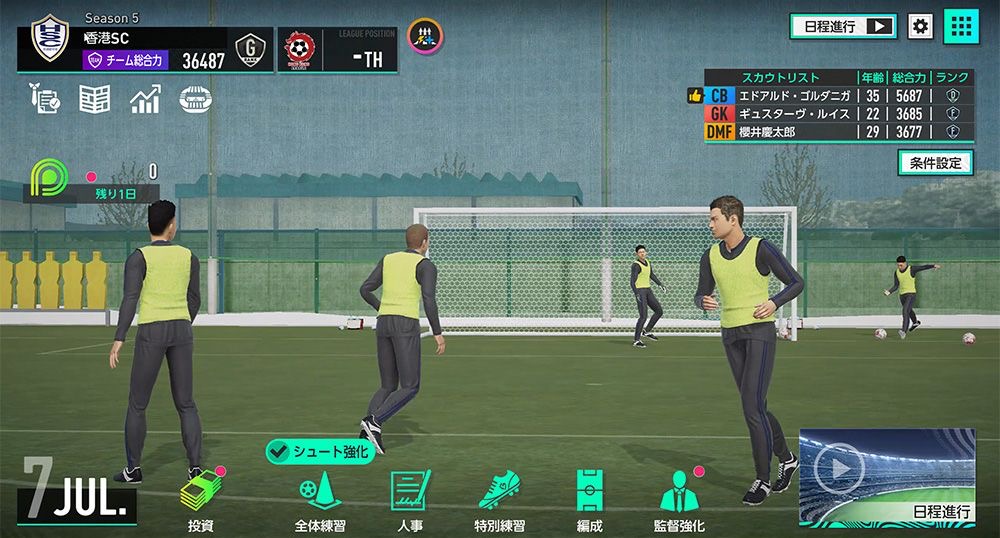
At first glance, Football Club Champions feels reassuringly familiar. You take charge of a modest club, build facilities, hire staff, train players and try to climb the footballing ladder.
Real players are present thanks to the FIFPRO licence, with Japanese and Korean leagues forming the backbone of the database. Manchester City’s branding is sprinkled in too. This is all a reminder that SEGA wants this to feel official and global.
But the longer you spend with it, the more stripped-back everything feels. There are formations, but no proper tactical instructions. No individual roles. No problem-solving that defines Football Manager. Transfers exist, yet negotiations don’t. Squad building is about availability rather than planning.
That simplicity is clearly intentional. This is a management game designed to be understood quickly, especially on mobile. It avoids the dense menus and analysis paralysis that turn some players away from Football Manager entirely.
However, for Football Manager fans, the depth is everything. And what replaces the depth is… problematic.
The gacha system
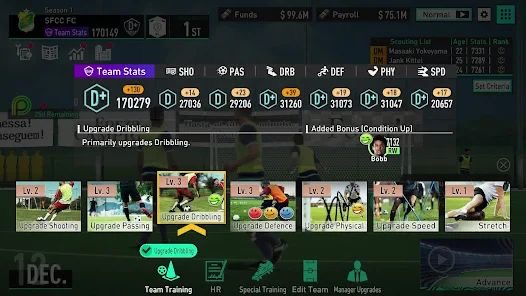
It doesn’t take long before Football Club Champions reveals its real structure.
Players aren’t primarily signed through scouting networks or shrewd negotiations, they’re pulled from packs. High-tier footballers sit behind percentage drop rates. Fully upgrading them requires duplicates through a limit break system. It’s a gacha game with a thin veneer.
This is where much of the backlash has come from, particularly on PC. Steam currently sits at a “Mostly Negative” rating, with players repeatedly pointing out that progression, especially in Dream Team mode, is heavily influenced by spending.
NotebookCheck highlighted this disconnect early on, noting how quickly negative reviews piled up once players realised how central the monetisation loop was. The Football Manager branding had set expectations the game never intended to meet.
Operation Sports echoed similar concerns, warning players not to mistake this for a genuine FM alternative. The comparison isn’t unfair, SEGA invites it, but it doesn’t flatter Football Club Champions once the systems are laid bare.
This isn’t a game where smart decisions trump resources. It’s one where patience, grinding or payment all push the same lever… just at different speeds. For long-time FM players, where pay-to-win is seen as abhorrent and against the spirit of Football Manager, this is a big problem.
Matchdays offer flashes of something interesting
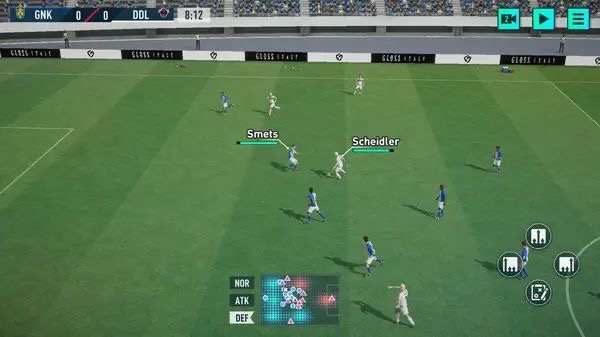
Not everything feels cynical, though. Matches themselves introduce a lightly interactive system that sits somewhere between simulation and involvement. Rather than simply watching highlights, players can influence attacking focus, adjust mentality, and react to momentum shifts using a heatmap-based interface.
It’s not hands-on in the way eFootball or EA Sports FC is, but it’s more involved than traditional Football Manager. For short sessions, particularly on mobile, it works surprisingly well. There’s tension in choosing when to push, when to sit back, when to gamble. It gives matches shape without demanding constant attention.
The problem is repetition. After a few seasons, the scenarios repeat, the choices blur together and the sense of control starts to feel cosmetic. What initially seems like agency slowly reveals itself as variation rather than depth.
Still, it’s one of the few ideas in Football Club Champions that genuinely feels like an attempt to evolve the formula rather than simplify it.
Platform matters… a lot
Where Football Club Champions truly struggles is consistency. The experience varies wildly depending on where it’s played.
PC
PC was always going to be the toughest crowd. Football Manager lives here, and comparisons are unavoidable. Steam reviews reflect that PC cynicism immediately. Many players describe the game as feeling like a mobile port. Clunky menus, limited options, and technical instability. Some report crashes after extended sessions, while others criticise performance on systems that handle far more demanding games without issue.
SoccerGaming’s review landed at a blunt 4/10, citing frequent crashes and progress loss as major issues, turning long-term play into a chore rather than a pull.
There are positives, cross-platform progression works cleanly, and short sessions are painless. However, as a PC-first experience, it never escapes the shadow of the game it’s borrowing its engine from.
Mobile
On phones, the tone shifts and this is obviously where it makes sense.
The App Store rating sits around 3.6 stars, dragged down heavily by launch-week server issues that left many players unable to log in at all. Several early reviews barely mention gameplay, they simply couldn’t access it.
Once stabilised, opinions soften. Some players praise the accessibility and the novelty of having a recognisable management sim available for free. Complaints focus more on the unskippable tutorial and slow onboarding than the concept itself.
Android users appear slightly more forgiving. With over a million downloads and a rating hovering closer to 3.8 stars on Google Play, many seem happy treating it as a light, long-term background game. The monetisation is criticised, but rarely with the same fury seen on Steam.
That likely comes down to expectation. Mobile players know the language of gacha games. PC players did not expect to be speaking it here
Console
On PlayStation, Football Club Champions struggles most and it has the weakest showing. PS Store ratings sit just above 3 stars, with complaints centring on performance, UI and polish. Reports of jerky frame rates are common, alongside awkward controller navigation clearly inherited from touch-based design.
Several users noted untranslated text and menu oddities, reinforcing the sense that the console version arrived last in line.
It’s playable but it’s not a comfortable experience. On a large screen, the mobile roots are impossible to ignore and with Football Manager Console available elsewhere, it’s hard not to wonder who this version is really for.
To sum up…
Football Club Champions isn’t a disaster, and it isn’t some misunderstood gem either. It feels more like an experiment still searching for its purpose. One with clear ambition, decent presentation and a surprisingly smooth cross-platform foundation. There are moments where it’s genuinely pleasant to play, with familiar dopamine hits through training, progression and incremental improvement. But too often, those moments are interrupted by reminders of what’s missing, or what has been deliberately placed behind monetisation. It sits awkwardly between Football Manager’s depth and eFootball’s immediacy, never fully committing to either side.
For casual or mobile-first players, there’s enough here to justify dipping in. For long-time Football Manager fans, you may play out of curiosity, but it’s not going to satisfy that itch. SEGA has promised updates, and with improved stability, softened monetisation and even a small increase in depth, this could grow into a useful second-screen football game… something that complements FM rather than competes with it. At launch, though, Football Club Champions remains a side project without a clear identity.
Check out our Feature Articles section for more FM26 Updates and Tips.