08 Jan, 2026
Is Pace all That Matters in FM26?
The FM26 match engine was tested to settle the debate: Is pace actually all that matters, or do technical stats finally have an impact?
This article is based on two experiment videos by Baz Nine Torres, here’s part 1 and part 2 of his series.
Before we get into the results, let’s address the elephant that’s been in the room for years. The pace debate is not new. If you’ve played Football Manager for any meaningful length of time, you’ve heard this argument before. Pace is broken. FM26 was supposed to move us on. A new match engine, plenty of time to fix this recurring issue. And yet, here we are again, watching another experiment that strongly suggests raw speed still trumps almost everything else.
FM Arena’s large-scale testing on FM24, run by user HarvestGreen22, is one of the most cited pieces of evidence in this entire argument. Over 50,000 simulated matches. Every attribute isolated. Every position tested. The conclusion was brutally simple: for outfield players, pace and acceleration had the biggest impact in every role. Technique, decisions, anticipation, off the ball, all supposedly vital attributes, barely moved the needle compared to raw physical speed.
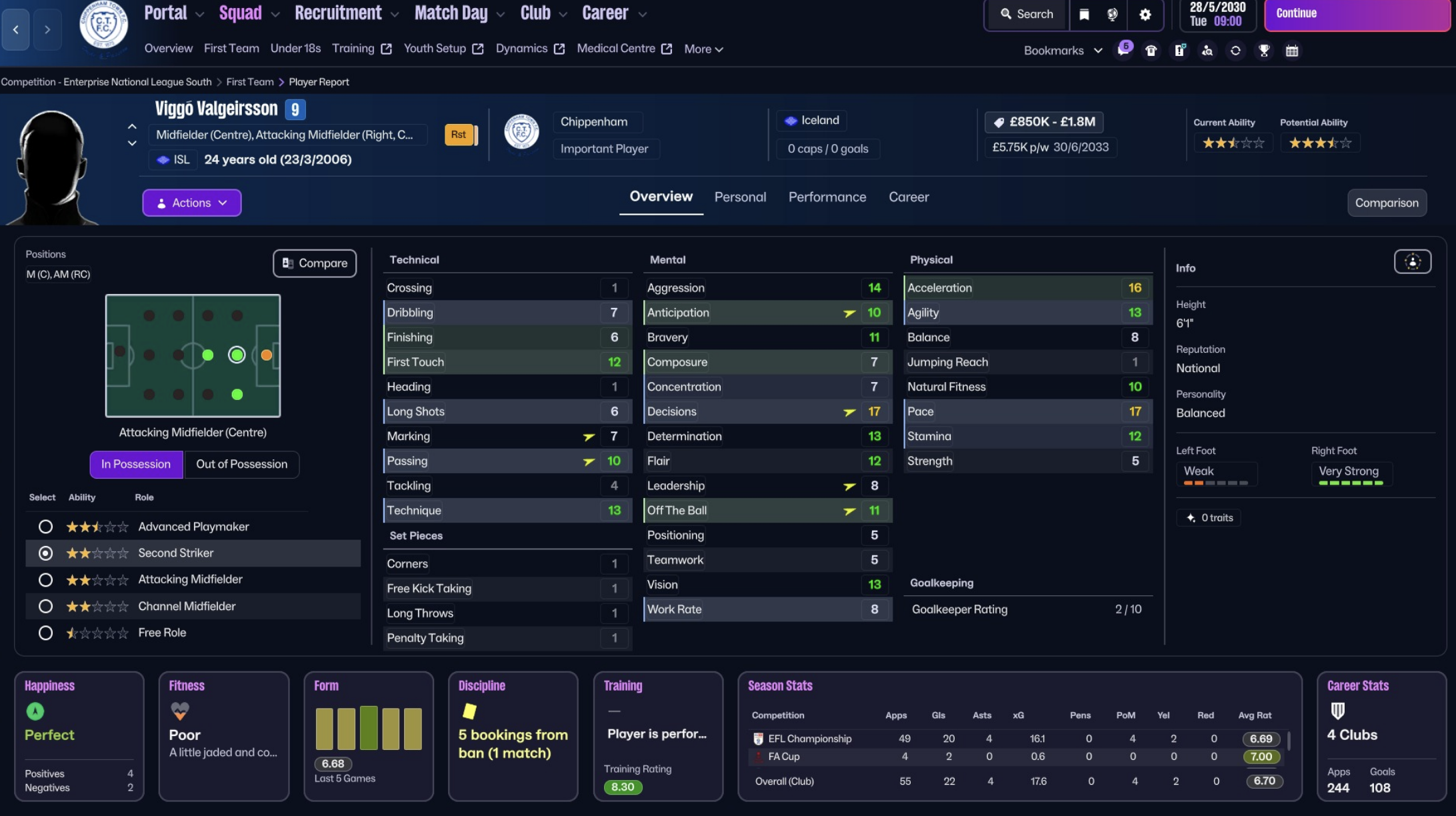
The question heading into FM26 was obvious: has anything actually changed? Baz’s experiment sets out to answer that with something incredibly Football Manager: a gloriously broken save. Building a team designed to fail… except for pace. Baz takes Chippenham Town, bottom of the National League South, the lowest playable tier in FM26 without custom databases, and replaces the entire squad with players selected on one criterion only: at least 15 pace and 15 acceleration. That’s it. Technical ability? Mostly awful. Mental attributes? Weak. Finishing? Often single digits. Composure? Laughable. If a player couldn’t run fast, they didn’t get in.
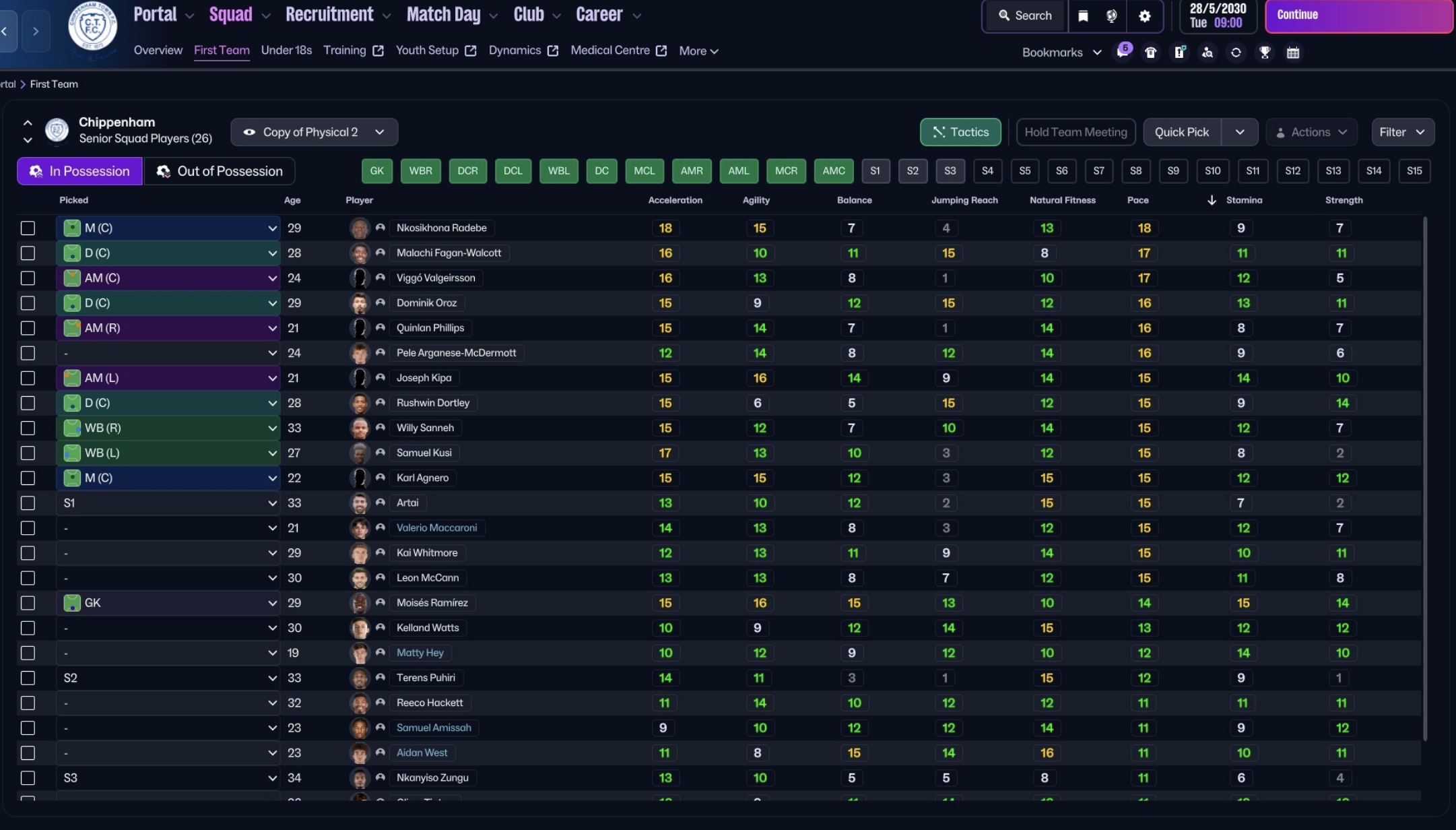
Baz even goes out of his way to choose players with low current and potential ability. Many of them are barely National League standard. Some are older, the biggest crime in Football Manager. Tactically, he uses the current number one ranked tactic on FM Arena: Kickback Strikerless v7, with custom set pieces added to avoid the experiment being derailed by defensive nonsense. From there, every match is simulated. No in-game tinkering. No micromanagement. Just pace, a meta tactic, and the match engine.
What actually happened
Season 1 – National League South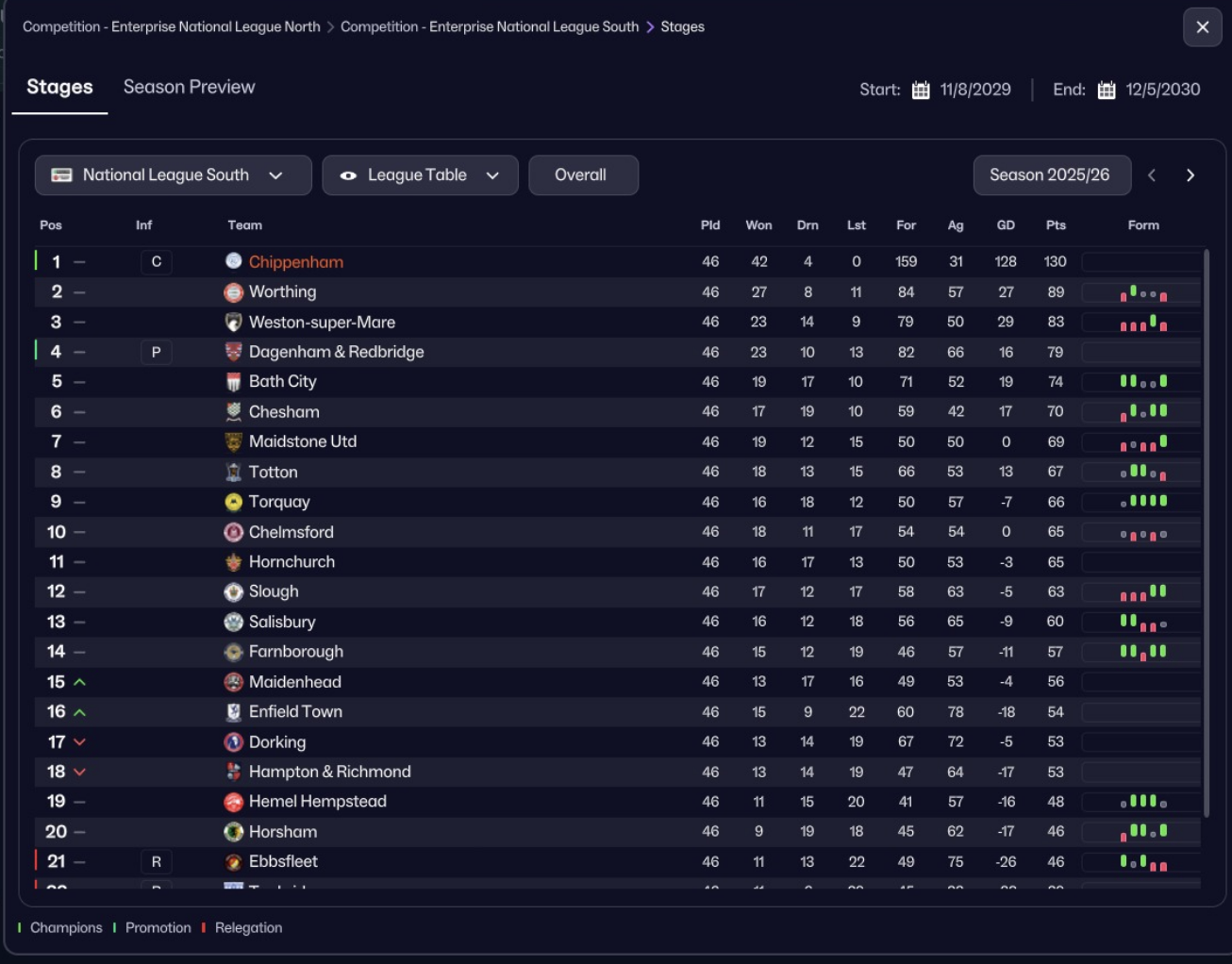
- 42 wins, 4 draws, 0 defeats
- 159 goals scored
- 128 points
- Total annihilation.
Season 2 – National League
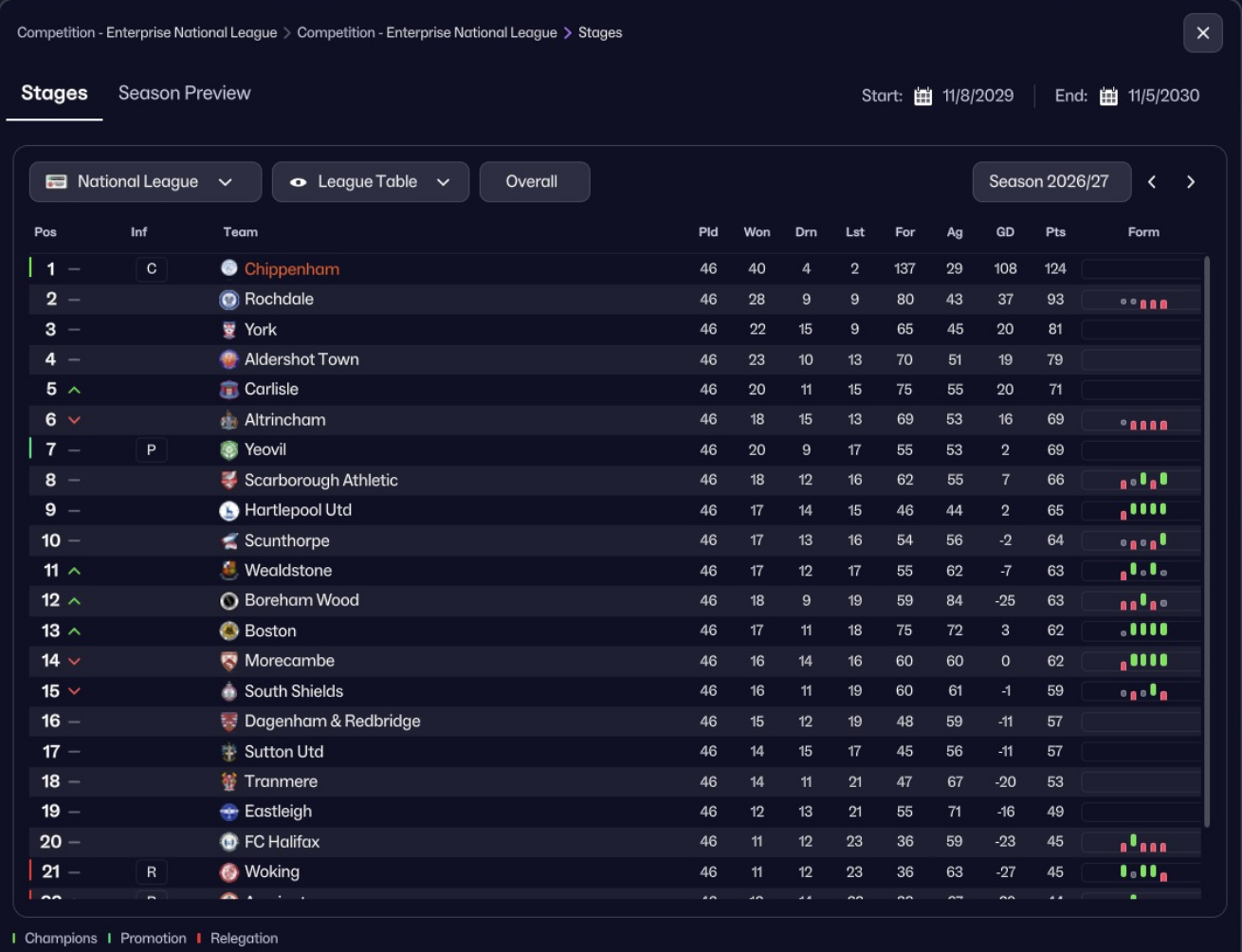
- 40 wins, 4 draws, 2 defeats
- 137 goals
- Another title
Still not surprising, but the margins are absurd.
Season 3 – League Two
- 39 wins
- 139 goals
- 23 conceded
- Champions again
At this point, the argument that “lower leagues are chaotic” starts to wear thin. These are now fully professional teams being dismantled by players who, according to the assistant manager, shouldn’t even be here.
Season 4 – League One
- 29 wins
- 96 points
- Title winners again
Less dominant, but still wildly beyond expectation. Four promotions in four seasons, powered almost entirely by raw speed.
Where the cracks finally appear
The Championship is where things finally slow down. Tellingly, it’s not because opponents are suddenly smarter or more technical. It’s because the players themselves start losing pace. As key players drop below the 15 pace, 15 acceleration threshold due to age, performance dips. Baz doesn’t respond with better passers or smarter midfielders. He simply replaces the slowing players with new ones who fit the same physical template. And once he does?
Chippenham recover, scrape into the playoffs, and somehow win promotion to the Premier League via penalties at Wembley. Five seasons. Five promotions. A squad built almost entirely on sprinting.
So… is pace literally all that matters?
Not quite. But it’s still doing far too much heavy lifting. Baz’s experiment doesn’t prove that technique, mental attributes, or football intelligence are irrelevant in isolation. What it shows, very clearly, is that the match engine continues to reward physical dominance far more consistently than anything else.
Pace:
- Creates separation
- Breaks defensive lines
- Covers tactical mistakes
- Masks poor positioning
- Turns mediocre chances into goals
And crucially, it does all of this regardless of league level, tactical complexity, or squad “realism”. The moment pace drops off, results dip. The moment pace is restored, results improve. The pattern is impossible to ignore.
Conclusion
The real problem exposed here isn’t that pace exists. It’s that it overwhelms everything around it. In real football, speed without decision-making, timing, or technique has limits. In FM26, those limits still feel far too forgiving. A striker with six finishing and six composure shouldn’t be a reliable goal threat simply because he’s quick, yet repeatedly, he is.
FM26’s engine may look better, but under the hood the same imbalance remains. Physical attributes dominate outcomes far more predictably than mental or technical ones. Has FM26 fixed the pace problem? Based on this experiment, no.
Baz’s videos don’t ruin Football Manager. Most experienced players already play like this to some extent. What they do is strip away the illusion that balance has arrived. Pace isn’t everything, but it’s still far too close. And until Football Manager properly rewards anticipation, positioning, technique, and decision-making in the same consistent, match-deciding way, the fastest players in your squad will continue to be the most important ones. Whether we like it or not.
Make sure you check out our Feature Articles section for more great FM26 updates and tips.